AI Is Moving Competition from Primarily Individual to Increasingly System-Dependent
Part 2 of our SEE China Insights series explains the second structural shift students and families need to understand in the AI era.
Part 1 explained the first structural shift: AI is reshaping the path to success — from Knowledge × Skill more visibly toward Judgment × Execution. Part 2 explains the second structural shift: AI is also changing how competition works.
AI is also changing how competition works
In the past, competition was mainly individual. A person's talent and effort were often enough to drive most competitive outcomes.
But AI is pushing competition away from relying mainly on the individual and toward increasing dependence on systems.
Why competition is increasingly not only about the individual
This change is happening in two directions at once.
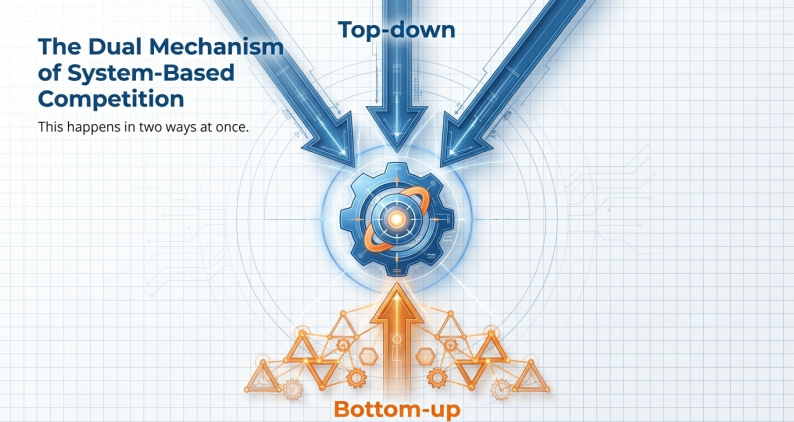
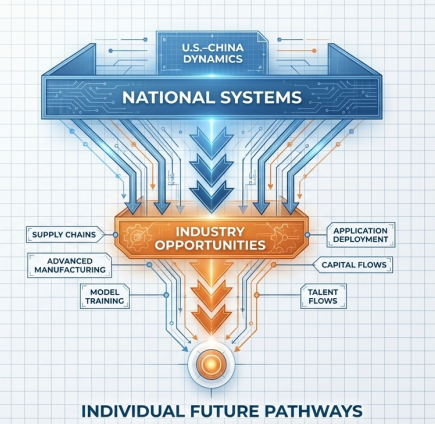
From the top down, AI is turning more high-value industries into globally coordinated production systems — from supply chains and advanced manufacturing to model training, application deployment, capital flows, and talent flows — and making them more directly shaped by U.S.–China dynamics. As a result, national systems shape industries, industries shape opportunities, and those opportunities increasingly shape individual future pathways.
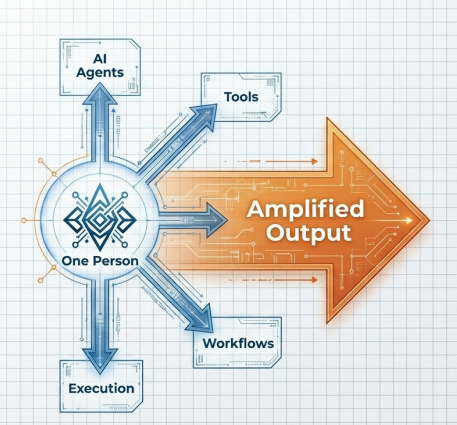
From the bottom up, AI is also making personal value creation more systemic. It makes it easier for individuals to organize tools, workflows, and execution into smaller systems that amplify value. One person orchestrating multiple AI agents may now achieve output that previously depended much more on a team or organizational system.
From the perspective of technological progress, competition increasingly depends not only on single technical breakthroughs, but on how effectively technology, capital, talent, infrastructure, and execution are integrated and amplified in larger systems.
How competition increasingly depends on systems from both directions
One part of our own personal success evaluation framework helps make this visible. Many of the key forces shaping individual future pathways are no longer purely internal to the individual. They increasingly depend on systems.
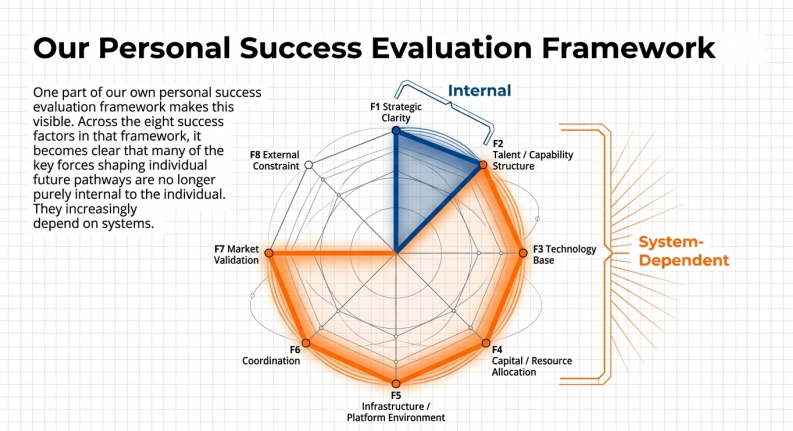
Many widely used career-development frameworks, including SCCT and OECD-related approaches, also include environmental conditions, supports, and barriers as part of how personal development is understood.
Why this affects students' majors, knowledge structure, and long-term career direction
For American students, this means China is no longer only a distant country issue. It is increasingly entering the chain that connects national competition, industry structure, and personal future pathways, directly affecting major choice, knowledge structure, and long-term career direction.

