How AI Is Making China More Directly Relevant to Students' Future Pathways
From a leader's “core curriculum” issue to a competitive advantage for students
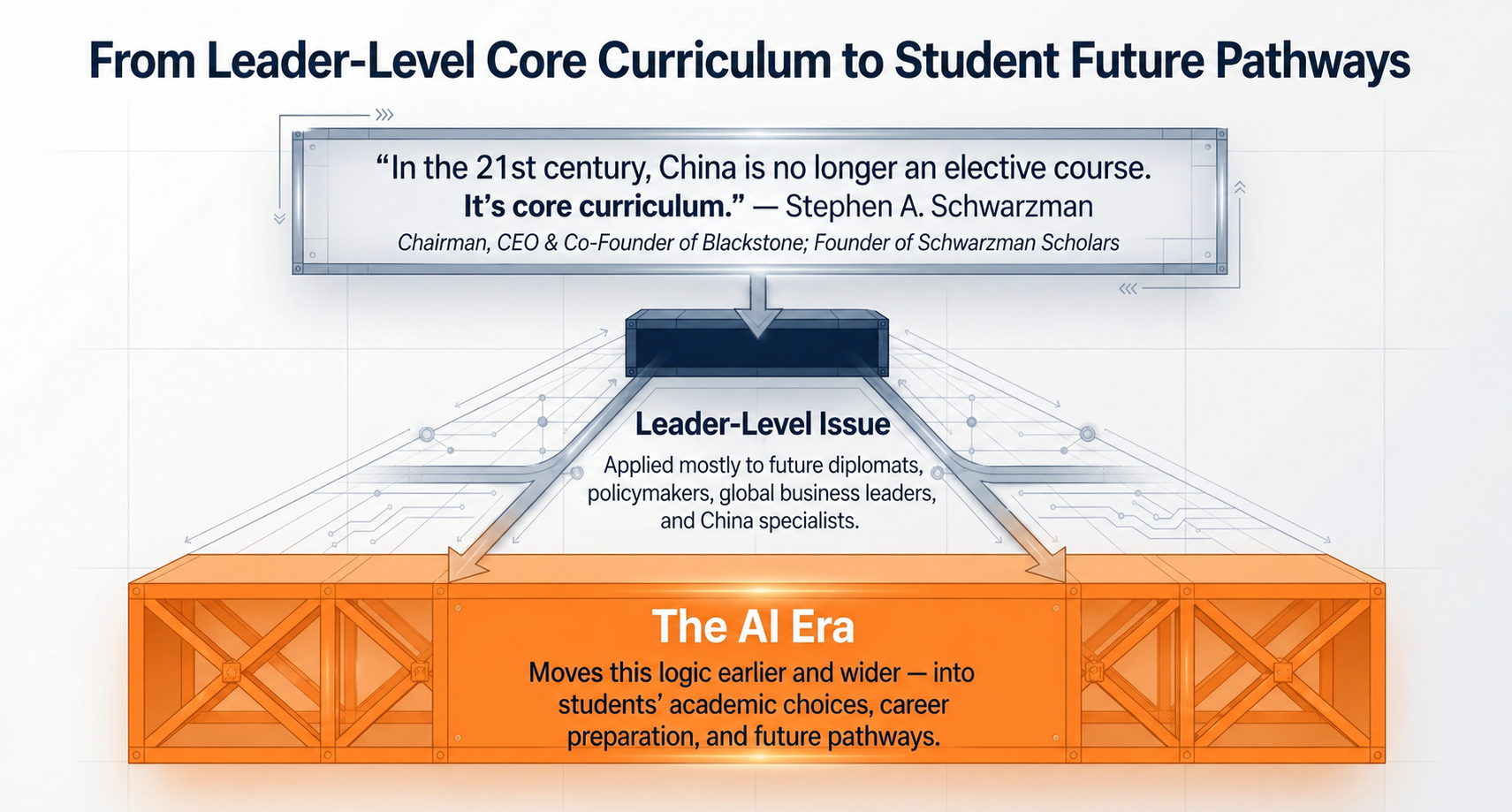
Back in 2013, Stephen A. Schwarzman said, “In the 21st century, China is no longer an elective course. It’s the core curriculum.”
In the AI era, that relevance now reaches further. Understanding China is no longer only something future diplomats, policymakers, global business leaders, or China specialists may need. As AI reshapes how industries coordinate, how competition works, and how future pathways form, systematic understanding of modern China is becoming more directly relevant to students’ academic choices, career preparation, and long-term direction.
This article explains why China is no longer only a distant global issue — and why systematic understanding of modern China is becoming a competitive advantage for students’ future pathways.
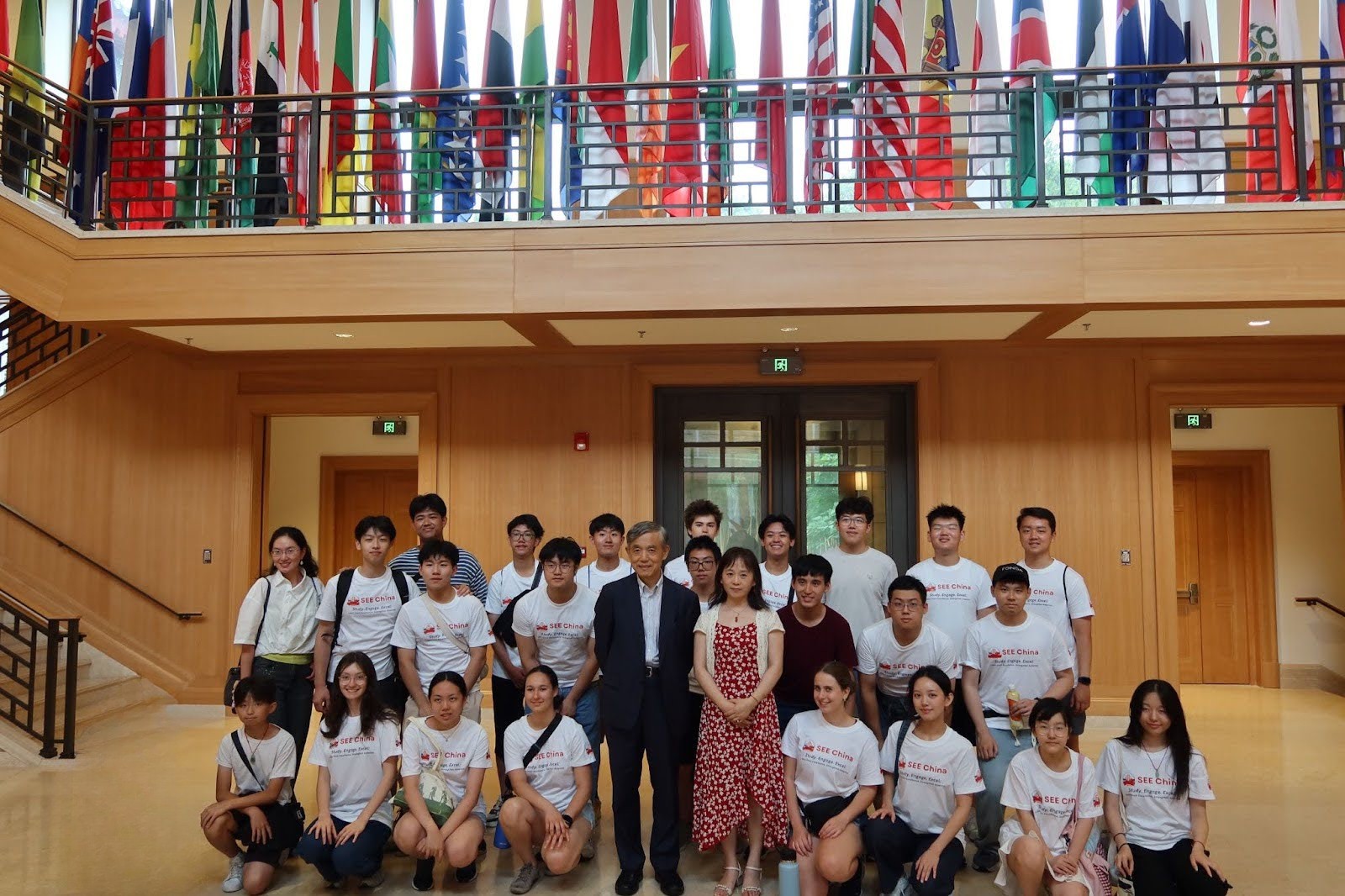
SEE China students with Xue Lan, Dean of Schwarzman College at Tsinghua University on July 3, 2025.
Disclaimer: Photo shown as factual documentation of program activity. No institutional endorsement is implied.
If you find this article helpful, join the SEE China 2026 Information Session to learn how SEE China helps students build the judgment, execution, and systematic understanding of modern China that the AI era increasingly demands.
Time: 7:30–9:00 PM EST
This is Part 3 of the series. Part 1 explained how AI is changing success — from Knowledge × Skill toward Judgment × Execution. Part 2 explained how AI is making competition increasingly system-dependent. This Part explains the third shift: AI is changing how China matters to students’ future pathways.
Why AI Turns Understanding of China from a Leader Issue into a Student Future-Pathway Issue
In 2013, Stephen A. Schwarzman said China was no longer an elective course, but “core curriculum.”
In the past, that logic most obviously applied to future diplomats, policymakers, global business leaders, and China specialists.
In the AI era, that relevance is becoming earlier, broader, more direct, and more urgent. It increasingly affects how students prepare for the future, how future talent is developed, and how long-term competitiveness is built.
This is not about whether one “likes China” or “dislikes China.” It is about future competition.
AI Is Amplifying China’s Relevance Through Two Forces
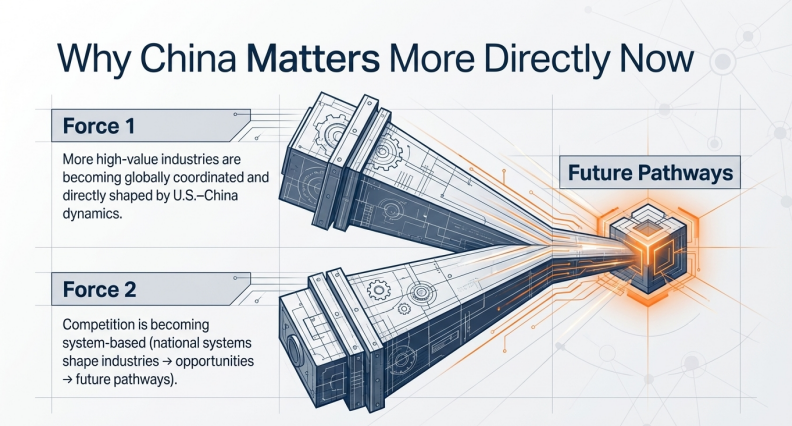
AI is amplifying China’s relevance to students’ future pathways through two forces at once.
First, AI is making more high-value industries globally coordinated and more directly shaped by U.S.–China dynamics — from AI, robotics, electric vehicles, and advanced manufacturing to healthcare technology, digital platforms, supply chains, and energy systems.
Second, AI is pushing competition more strongly toward system-based competition.
In practical terms, China is entering the chain that connects national systems, industries, opportunities, and students’ future pathways.
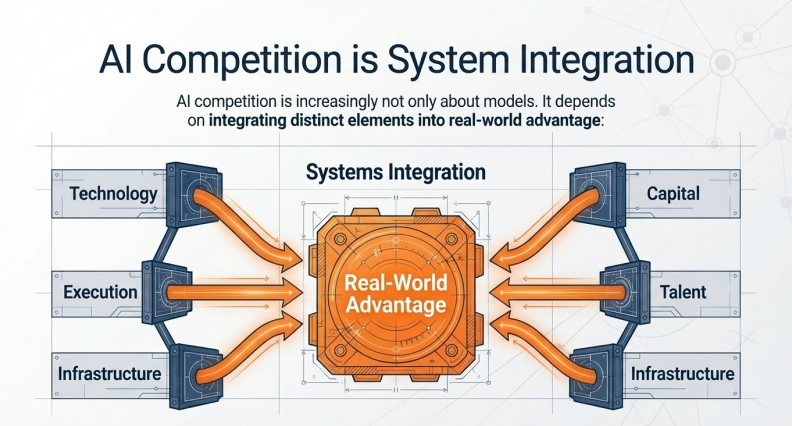
Advantage increasingly depends not only on isolated talent or single technical breakthroughs, but on how effectively larger systems integrate technology, capital, talent, infrastructure, and execution into real-world outcomes.
AI competition is also increasingly not only about models. It is increasingly about which systems can better integrate technology, capital, talent, infrastructure, and execution into real-world advantage.
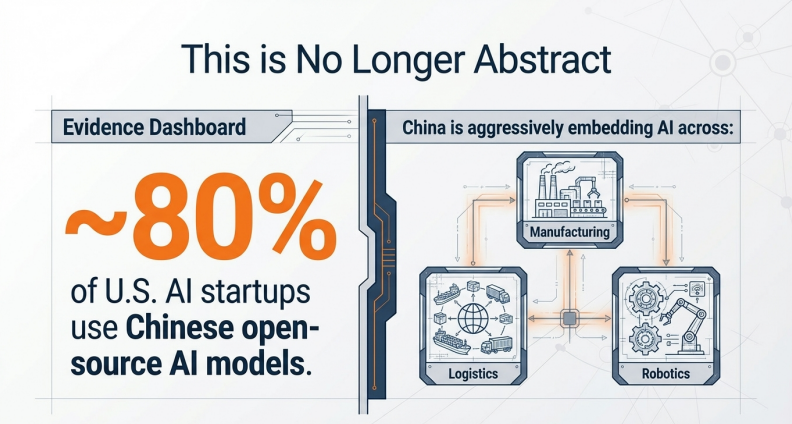
This is no longer abstract. Reuters cited a U.S. advisory-body report saying that about 80% of U.S. AI startups now use Chinese open-source AI models. Reuters also reported that China is embedding AI across broad parts of its economy, including manufacturing, logistics, and robotics.
Together, these signals point in the same direction: AI is making China more directly relevant to the industries and systems American students will increasingly need to understand.
Why Better Understanding Becomes a Strategic Advantage
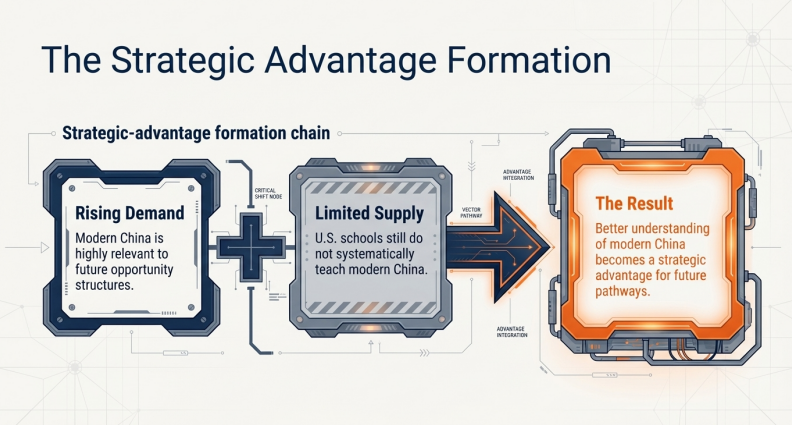
As modern China becomes more directly relevant to the systems and opportunity structures shaping students’ future pathways, demand for stronger understanding rises.
But structured supply remains limited. Most U.S. schools still do not systematically teach modern China. When China appears in school settings, it often comes through indirect proxies such as East Asian Studies, Mandarin learning, news headlines, or fragmented topics — not as a modern national, city, industry, and company system that students learn to analyze.
That is why better understanding of modern China is no longer just useful knowledge. In the AI era, it can become a competitive advantage for students’ future pathways.
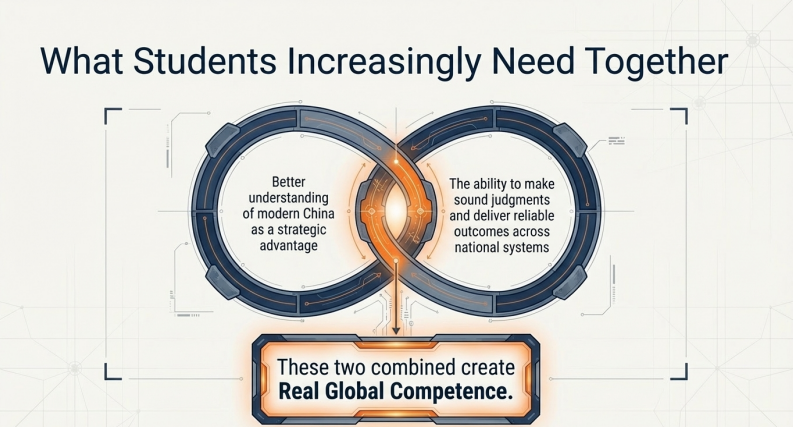
The Two Things Students Increasingly Need Together
Taken together, the first three parts of this series point to a clearer conclusion.
In the AI era, students increasingly need two things together.
Here, “global” does not simply refer to geography. It means across national systems.