SEE China - Study the system. Engage the reality. Excel forward.
Build Global Competence in the AI Era Through Modern China
In the AI era, students need more than school knowledge. They need the ability to understand real-world systems, make sound judgments, and turn insight into reliable outcomes.
SEE China is a 30-day future-pathways field training program for Global Competence in the AI era through modern China.
Back in 2013, Stephen A. Schwarzman of Blackstone said, "In the 21st century, China is no longer an elective course. It is core curriculum." In the AI era, that statement becomes even more true as real Global Competence increasingly requires two things: understanding modern China and the ability to make sound judgments and deliver reliable outcomes across national systems.
Through Youth4AM's own Modern China curriculum and structured training, students transform top-tier experiences across leading cities, universities, companies, and innovation systems into real capability - Global Competence. The work they produce becomes visible evidence of ability for college applications, major and career direction, and long-term competitiveness in the AI era.
This is not a program built to chase the AI trend. It builds on a capability system Youth4AM has been training since 2019.
Why China Matters at the Highest Level
Across administrations and political contexts, China remains central to U.S. diplomacy, strategy, and educational exchange. This is part of why serious student engagement with China remains relevant.
"On November 15, 2023, the heads of state of China and the United States agreed to promote and strengthen dialogue and cooperation in various fields between China and the United States, including expanding exchanges in education, international students, youth, and culture."
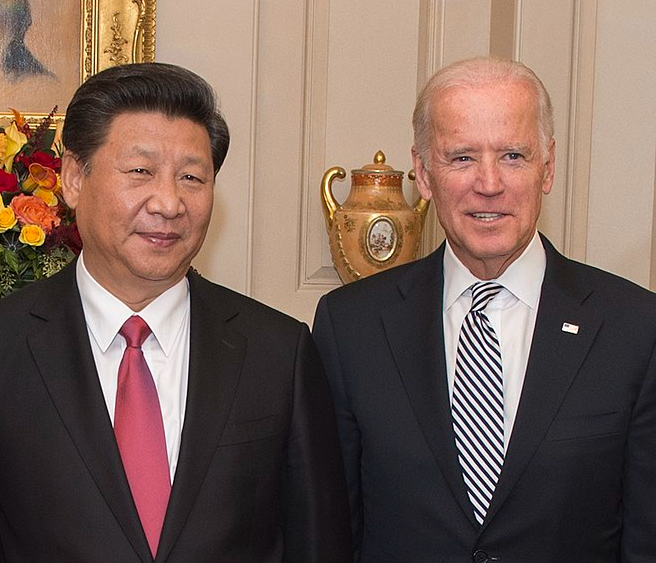
"Reuters reported that President Donald Trump is scheduled to visit China from March 31 to April 2, 2026, underscoring the continuing importance of China in U.S. leadership, diplomacy, and strategy."

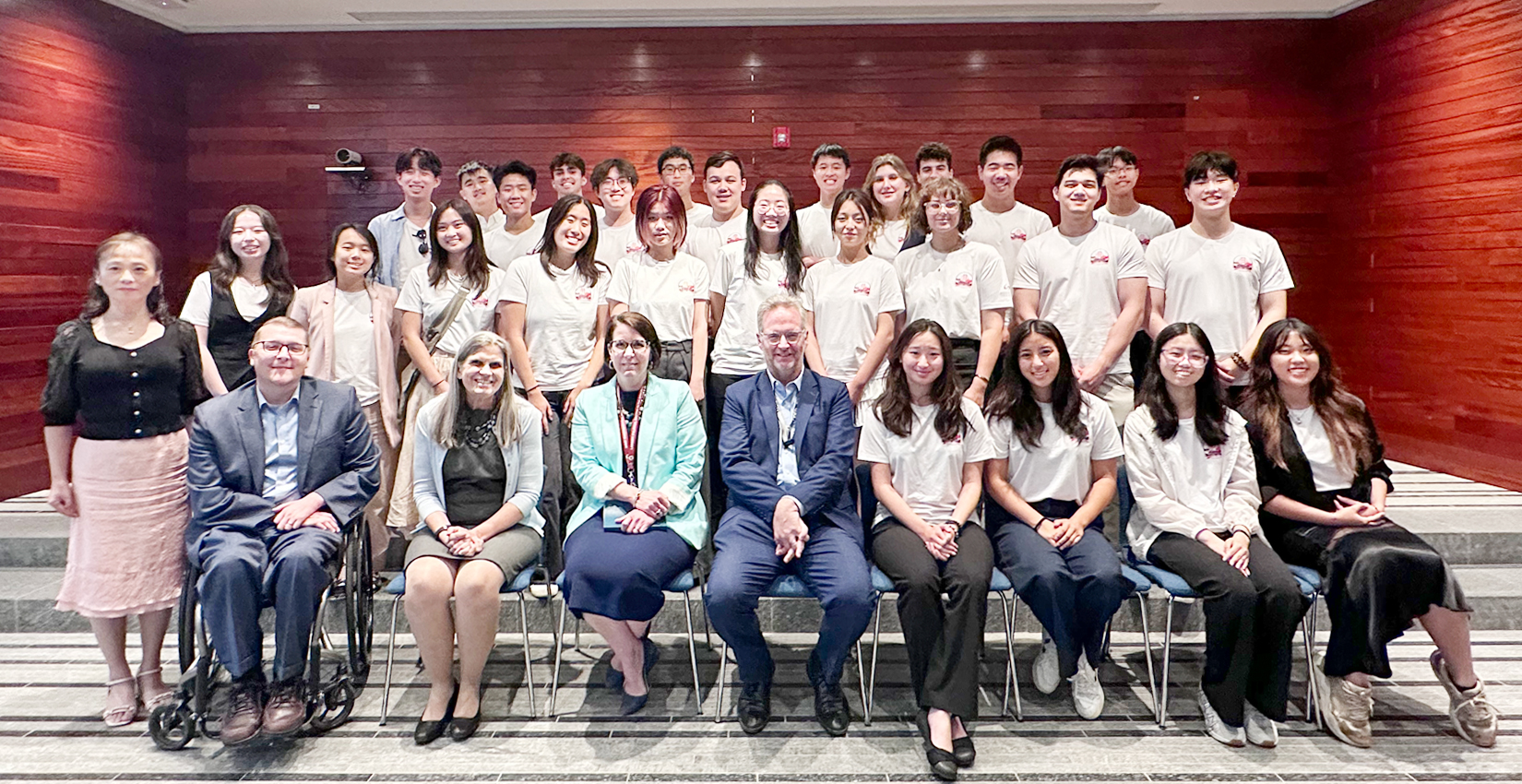
SEE China at the U.S. Embassy
SEE China members with distinguished members of the U.S. Embassy on June 13, 2024. From left to right: Austin Slaymaker, Special Assistant to the Minister Counselor for Management; Shari Bistransky, Deputy Public Affairs Officer; Claire Liebmann, Political Officer; and Mark Maloney, ECON Officer.
Disclaimer: Images and quotes are presented for factual context and educational purposes only. They do not constitute endorsement of SEE China by any government, public institution, or official.
What is SEE China?
SEE China is a 30-day future pathways field training program for Global Competence in the AI era through modern China.
AI is reshaping how success works.
In the past: Success ≈ Knowledge x Skill.
Today: Success ≈ Judgment x Execution.
As a result, what becomes more valuable is the ability to make sound judgments and deliver reliable outcomes. This capability is best developed inside complex real-world systems. When exercised across national systems, it becomes Global Competence.
In the AI era, that competence increasingly requires two things: understanding modern China and the ability to make sound judgments and deliver reliable outcomes across national systems.
Why this is becoming more urgent?
AI is increasing urgency in both areas.
First, AI is making more high-value industries operate through globally coordinated systems in which U.S.–China dynamics matter directly, raising the urgency of understanding modern China. For American students, this makes China both a powerful training field for developing Global Competence and a strategic knowledge advantage for the future.
Second, AI-driven structural change is already becoming visible in entry-level positions, while also making real-world systems more complex at an unprecedented speed. That is why students need this training now, before they get lost in complexity later.
Why SEE China exists?
But most schools teach neither well. This is not mainly a matter of intention, but a structural issue. Education systems typically take a decade or longer to adapt, while AI is reshaping industries and career paths within years or even months.
SEE China trains both. It builds on Youth4AM’s independently developed Modern China course and AI-era capability formation system developed since 2019. The system was not created because of AI. Rather, AI made its value more visible and more urgent.
Since 2019, Youth4AM has trained 1,000+ students from NYC top high schools and 50+ leading U.S. universities across programs, and has been acknowledged by dozens of federal, state, and city officials .
As a result, SEE China gives students a stronger foundation in both modern China understanding and AI-era capability than a newly assembled AI-themed program.
Why Is this becoming more urgent now?
AI is creating three structural shifts that are fundamentally changing what counts in education, careers, and leadership.
Decision Complexity Up
AI dramatically increases the number of options, the speed of decision cycles, and the volume of available information. It also amplifies noise. Knowing more becomes easier — making the right decisions becomes increasingly important.
Execution Competition
When AI enables people to produce work faster, competition shifts from whether work can be produced to whether it can be delivered reliably.
Error Amplification
AI accelerates the consequences of mistakes. Organizations increasingly emphasize whether decisions are evidence-based, outcomes are verifiable, and results are reviewable.
Together, these shifts lead to one conclusion: the ability to make sound decisions and deliver reliable outcomes becomes increasingly valuable. In other words, the question is no longer only what students know, but whether they can judge well and perform well in the real world.
This view is widely shared across the global technology industry.
"AI amplifies human capability - the key question becomes what problems we choose to solve."
"The most important skill in the future is knowing what questions to ask and how to evaluate the answers."
"AI will significantly increase the value of human judgment."
"AI will shift value from information to judgment."
Why understanding modern China is also becoming more urgent?
At the same time, AI is also raising the urgency of understanding modern China. More high-value industries now operate through globally coordinated systems in which U.S.–China dynamics matter directly. For students preparing for future college, career, and leadership pathways, this is no longer a niche topic. It is becoming part of real Global Competence.
Why students need this training now?
AI is also making the real-world systems students will eventually need to study in, work in, and collaborate across more complex, while compressing the timeline in which this capability must form. This effect is already becoming visible in entry-level positions. That is why students need this training now. They cannot afford to wait until later to begin building the right foundation.
Why Schools Rarely Teach This?
School systems are designed to focus on knowledge transmission and standardized evaluation. However, Global Competence requires making judgments inside real complex systems and delivering outcomes under real constraints - capabilities that are difficult to build through lectures or traditional classroom structures.
Most U.S. schools also do not systematically teach modern China. When China appears in school settings, it is often through indirect proxies such as East Asian Studies coursework or Mandarin learning rather than structured study of modern China itself. Our research found that these traditional proxies had limited impact on students' understanding of modern China, reinforcing the need for structured real-world training.
This is not mainly a matter of intention, but a structural issue. Education systems typically take a decade or longer to adapt, while AI is reshaping industries and career paths within years or even months. The question is therefore not whether schools will eventually adapt, but whether students can begin developing these capabilities before this structural shift fully unfolds.
If schools rarely teach these capabilities well and do not systematically teach modern China, where can students begin to train both?
A Powerful Training Ground and Strategic Knowledge Advantage
China plays a unique role in developing Global Competence because it provides both a powerful training field and a strategic knowledge advantage.
China as Training Ground
First, China possesses the world's most complete industrial ecosystem and large-scale production capacity, while rapidly emerging as a major innovation competitor. The U.S. and China represent two distinct institutional and innovation systems — making China a powerful comparative system for understanding how global industries operate.
Second, Modern China is also rarely taught systematically in American schools. Fragmented information and polarized narratives create high levels of information noise — which makes China a valuable environment for training judgment and calibration.
China has evolved from a manufacturing hub into a major global innovation competitor, competing and interacting directly with the United States in:
Why this matters in the AI era?
Yet a clear knowledge gap remains. The China Knowledge Assessment Report revealed that even academically exceptional Chinese-American students scored only 42/95 on basic modern China knowledge, while non-Chinese students were estimated to score as low as 25/95.
China Knowledge Assessment Report
This creates a structural imbalance: demand for understanding China is rising while supply of systematic knowledge remains low. In the AI era, that imbalance becomes even more important. As more high-value industries operate through globally coordinated systems in which U.S.-China dynamics matter directly, understanding China becomes not only a knowledge advantage, but also part of real Global Competence.
Read the China Knowledge Assessment Report ->For students, this makes China important in two ways: it is something they increasingly need to understand, and it is also one of the most powerful real-world training fields in which Global Competence can be developed and applied.
What Does SEE China Teach?
SEE China is not a cultural exchange trip, a study tour, or a classroom extension. It is a future pathways field training program for Global Competence through real-world systems.
In the AI era, real Global Competence increasingly requires two things:
- Understanding modern China
- The ability to make sound judgments and deliver reliable outcomes across national systems
Most schools teach neither well. SEE China trains both.
China plays two roles in this program
China plays two roles in this program.
First, it is a powerful training field. SEE China uses China not as a passive destination, but as a real-world environment in which students can observe, compare, and learn how complex systems actually work. Among today’s global systems, the U.S.–China relationship is one of the most important environments in which Global Competence can be developed and applied.
Second, it is a strategic knowledge advantage. Understanding modern China itself becomes a long-term advantage in the AI era.
The core capability behind this
The ability to make sound judgments and deliver reliable outcomes is developed inside complex systems, where students must define problems, analyze complexity, organize priorities, coordinate resources, make evidence-based decisions, and deliver outcomes under constraint. As systems become more complex, the value of this capability increases. At Youth4AM, we call the core capability behind this Structured Judgment × Reliable Execution.
When exercised across national systems, this capability becomes Global Competence. Here, “global” does not simply refer to geography. It refers to the ability to make judgments and act across systems.
What makes SEE China different
What makes SEE China different is not only the quality of the exposure, but the fact that the exposure itself is treated as a training ground.
SEE China is built on four layers:
Real-World Training Ground
Students train inside real U.S.–China systems, where cities, universities, companies, and innovation environments are treated as systems to be observed, compared, and understood — not simply destinations to visit.
Modern China Curriculum
The program builds on Youth4AM’s independently developed Modern China course, which provides the structured foundation for modern China learning throughout the program.
Capability Formation System Since 2019
SEE China is not a newly assembled AI-themed program. It builds on a capability formation system Youth4AM has already been training since 2019. AI did not create this need; it made the value of this capability more visible and more urgent.
Managed Conversion Mechanism
The program includes structured loops that help students turn exposure into measurable capability development. Experiences are not left as fragmented impressions. They are processed, tested, strengthened, and converted into capability through repeated cycles of judgment and execution.
How Does SEE China Train Students?
These four layers work together as a training process, not just as a program design.
Real-World Training Through Premier Exposure
SEE China places students inside real U.S.-China systems through premier exposure across leading cities, companies, universities, and innovation environments. Premier exposure helps engage and motivate young students, while real systems provide the complexity this training requires.
Capability Training Built on a System Developed Since 2019
SEE China builds on Youth4AM's capability formation system developed since 2019, not assembled in response to the AI trend.
Modern China as a Structured Learning System
Field experiences are intentionally organized through Youth4AM's independently developed Modern China course, so that cities, companies, universities, and China itself are understood as interconnected parts of a larger, complex national system rather than isolated points of exposure.
Structured Conversion From Exposure to Capability
Experience does not automatically become capability. That is why SEE China includes a managed training loop - including Pre-Trip Training, Daily Reflection, Weekly Calibration, Final Presentation, and Pre/Post Trip Assessment - to transform top-tier exposure into real capability, rather than leaving it as fragmented impressions and short-lived memories.
To see how SEE China works in practice — including the program structure, training flow, and what students actually do
Within 30 Days: A Stronger Foundation for Global Competence
Within 30 days, students do not master everything. What they gain is a stronger foundation for Global Competence through premier exposure and structured training.
Build a Stronger Foundation for Structured Judgement x Reliable Execution
Students visit China’s major innovation cities such as
Beijing,
Shanghai,
Shenzhen, and
Hangzhou,
engage with leading technology companies such as
Alibaba,
Tencent,
ByteDance,
Xiaomi, and
BYD,
and interact with top universities such as
Tsinghua,
Peking University,
Fudan University,
Zhejiang University, and
Shanghai Jiao Tong University.
Through the Modern China curriculum and SEE China structured training cycles, these top-tier resources are transformed into real capability: Structured Judgment × Reliable Execution.
Better Understand Why Modern China Matters
Direct exposure matters, especially for young students. But SEE China goes beyond immersion alone. Through Youth4AM's Modern China framework, students learn to compare China and the United States through structured analysis, evidence, and system-level reasoning. As a result, they begin to understand why China is not just background knowledge, but a real strategic variable in how AI-era competitiveness is formed - and why that understanding can lead to better judgment, better choices, and earlier preparation.
Gain Clearer Direction for Majors and Career Paths
By observing and analyzing industries such as AI, robotics, digital economy, smart cities, healthcare technology, and electric vehicles across the U.S. and China, students gain a clearer understanding of how high-value sectors are evolving and where their own academic interests and future career direction may fit.
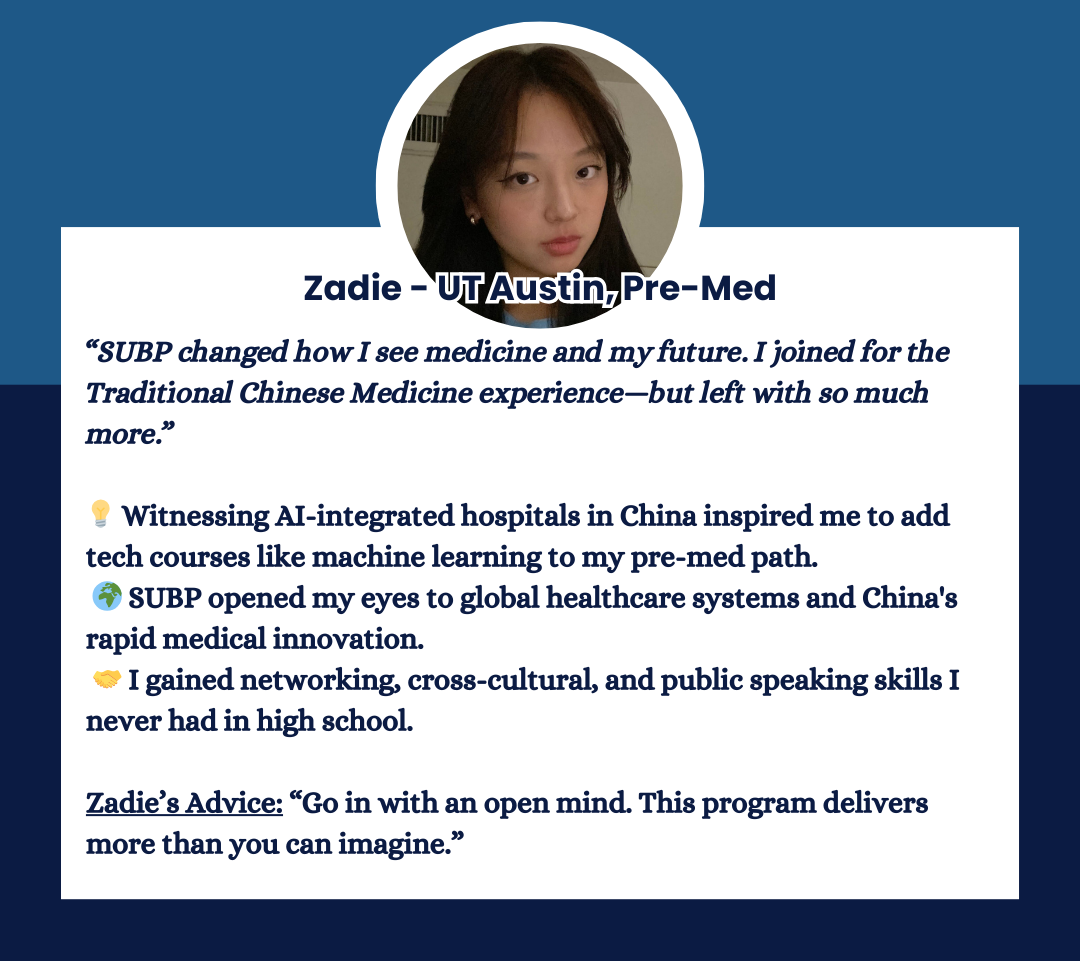
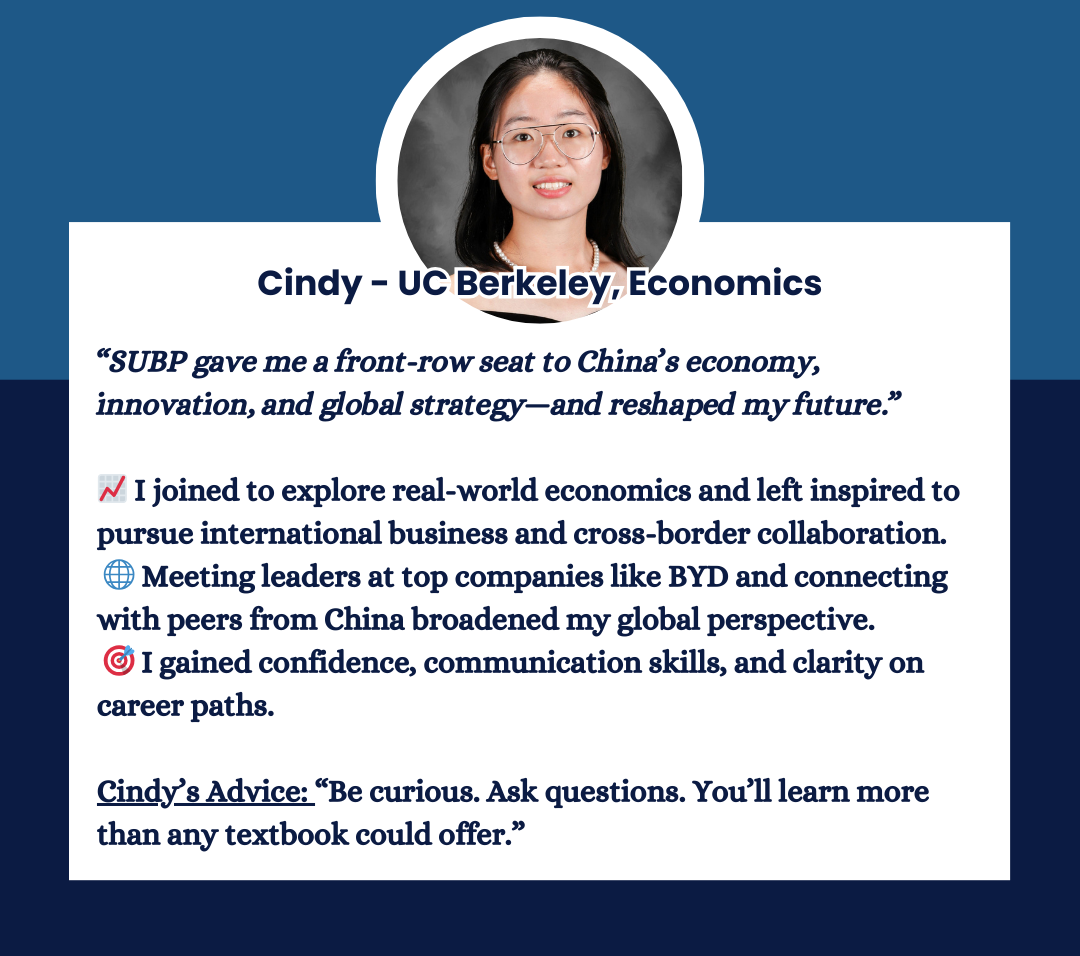
Produce Real Outputs for College Applications & Interviews
Students complete real analytical outputs including:
- Structured U.S.-China comparative analysis across AI-integrated domains: payments, logistics, smart retail, transportation, healthcare, and smart cities
- Research reports on American students' understanding of modern China
These outputs are verifiable and reusable capability assets that can be incorporated into college applications, interviews, and future research.
To see how students turn observation into structured analysis and real deliverables,
Build Collaboration Skills, Leadership & Long-Term Peer Network
SEE China carefully selects participants and intentionally builds cross-school, cross-disciplinary, and cross-cultural cohorts that simulate real-world collaboration.
Students work across structured teams in research, operations, content, and technology — strengthening leadership, project management, communication, and data analysis through real team-based deliverables, while also building a long-term peer network.
Why families trust SEE China
Who Join?
Since 2019, Youth4AM has trained 1,000+ students from NYC top high schools and 50+ leading U.S. universities; acknowledged by dozens of federal, state, and city officials.
Students in the 2024–2025 cohorts — selected from several hundred applicants — represented 30+ top U.S. universities, including:
What changed?
Selected measurable outcomes from recent cohorts include:
- Basic modern China knowledge scores improved from 50/95 to 64/95 after participation.
- Students showed a 33% increase in understanding of Chinese e-commerce efficiency.
- Students showed a 17.5% increase in recognition of business professionalism in China.
Student work provides another layer of proof. To see how students turn observation into structured analysis and real deliverables, explore the Student Work page.
Why Families Trust It?
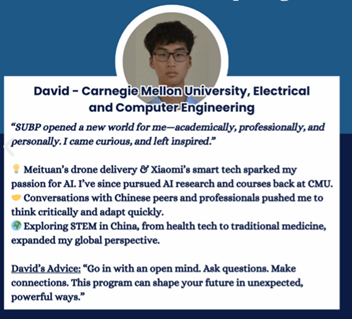
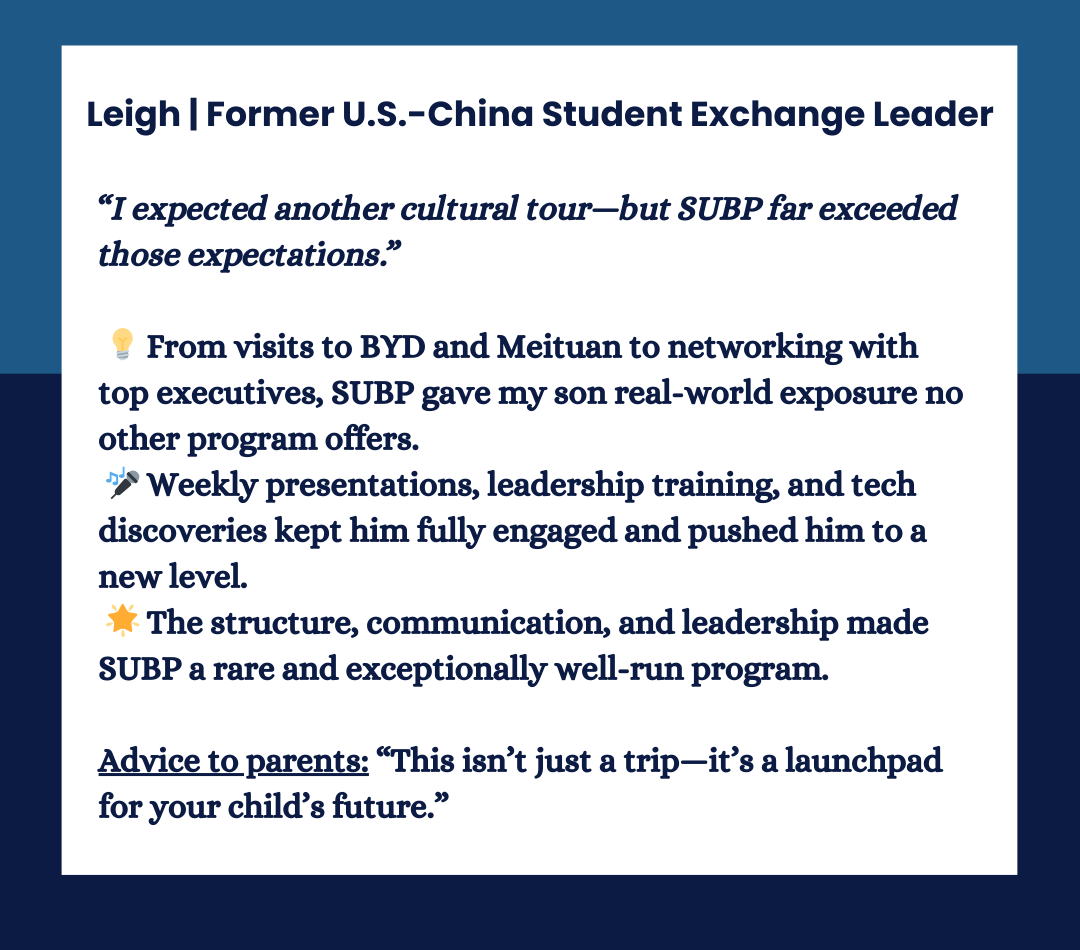
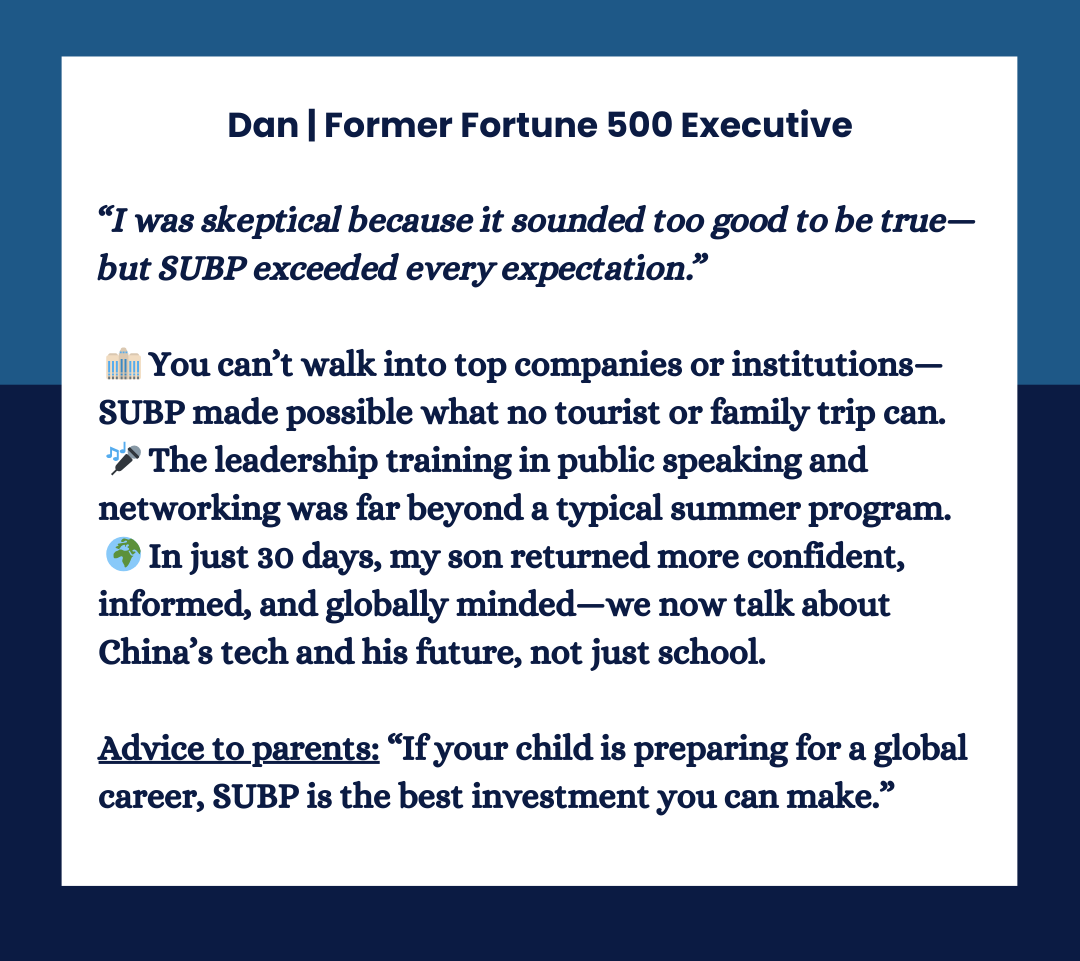
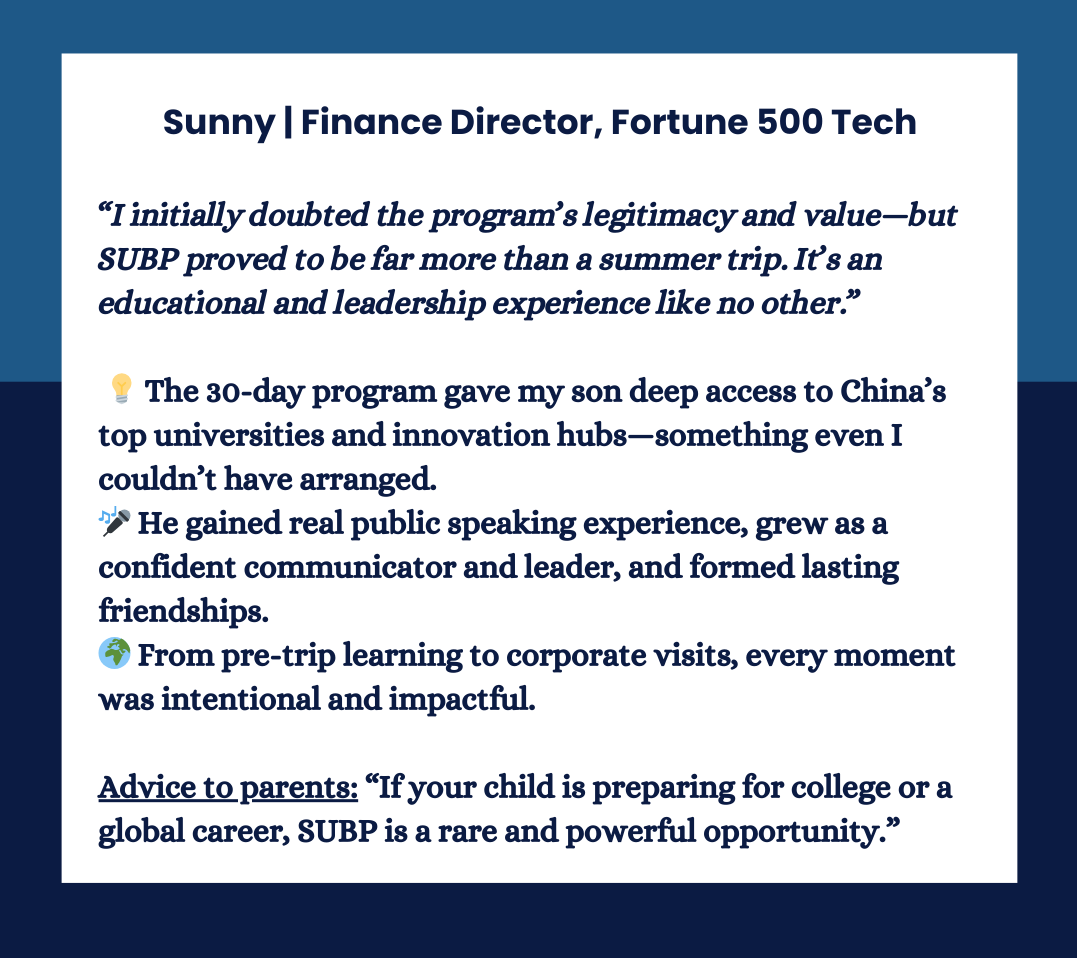
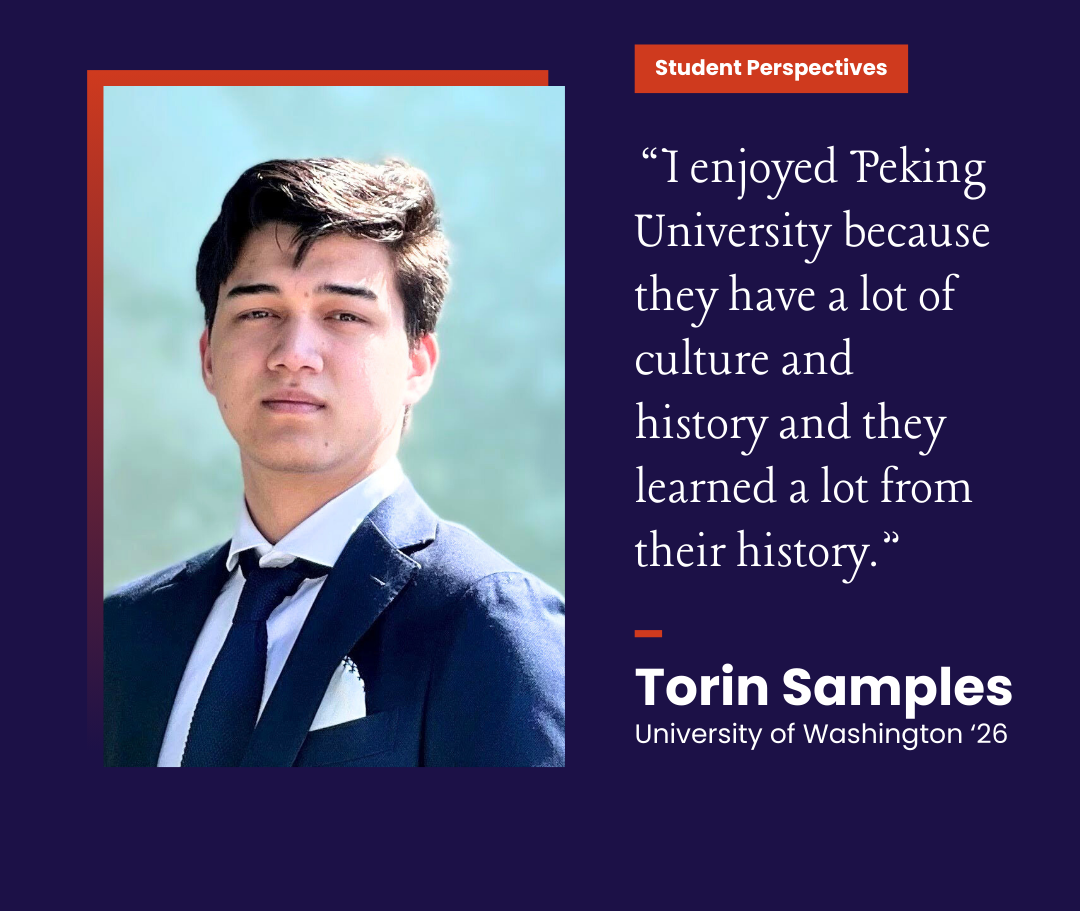
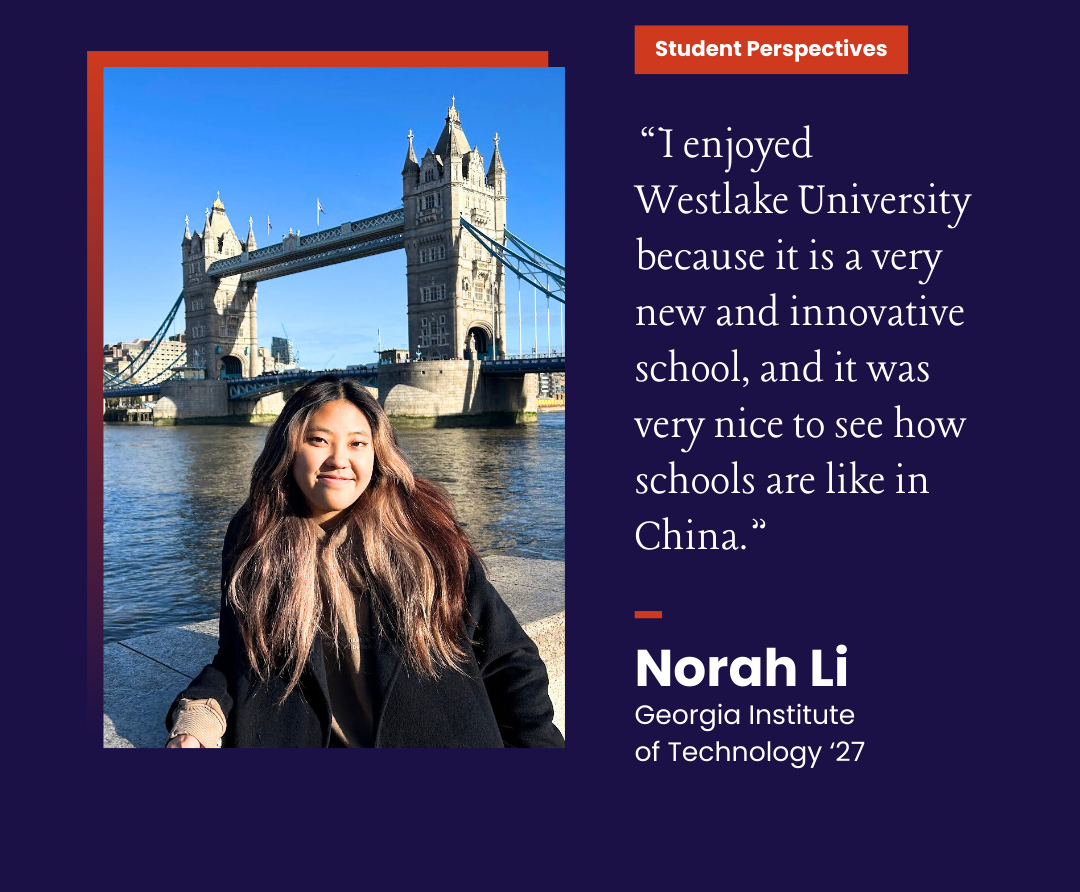
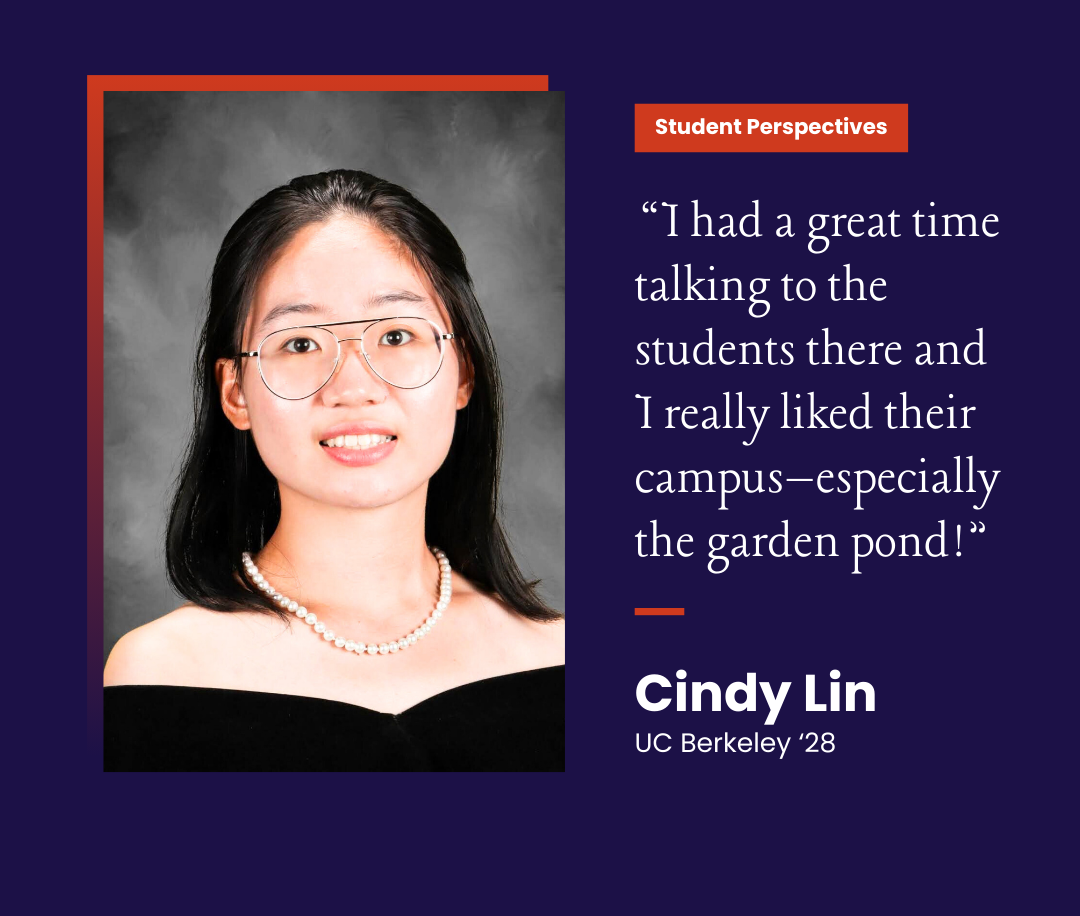
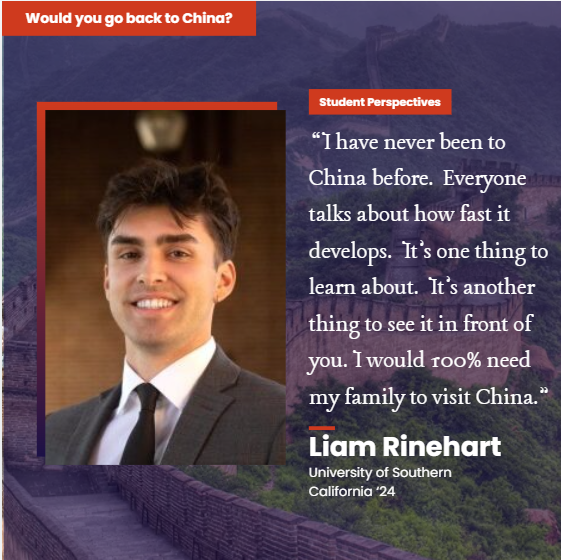
In the 2025 SEE China cohort, over 50% of students joined through referrals, reflecting strong trust from alumni and families.
Why Future Leaders Need to Understand China
This is not only a diplomatic question. It is also a leadership question. Across education, public service, and global affairs, influential voices have emphasized that future leaders need real understanding of China - and SEE China gives students an early way to begin building that understanding.
"We need to commit to a long-term relationship...get young Americans, students...to come to China to learn the language, history, and culture so 20-30 years from now, university professors, secretary of state and ambassadors have experience in this country which is critical."

"Those who will lead the future must understand China today."

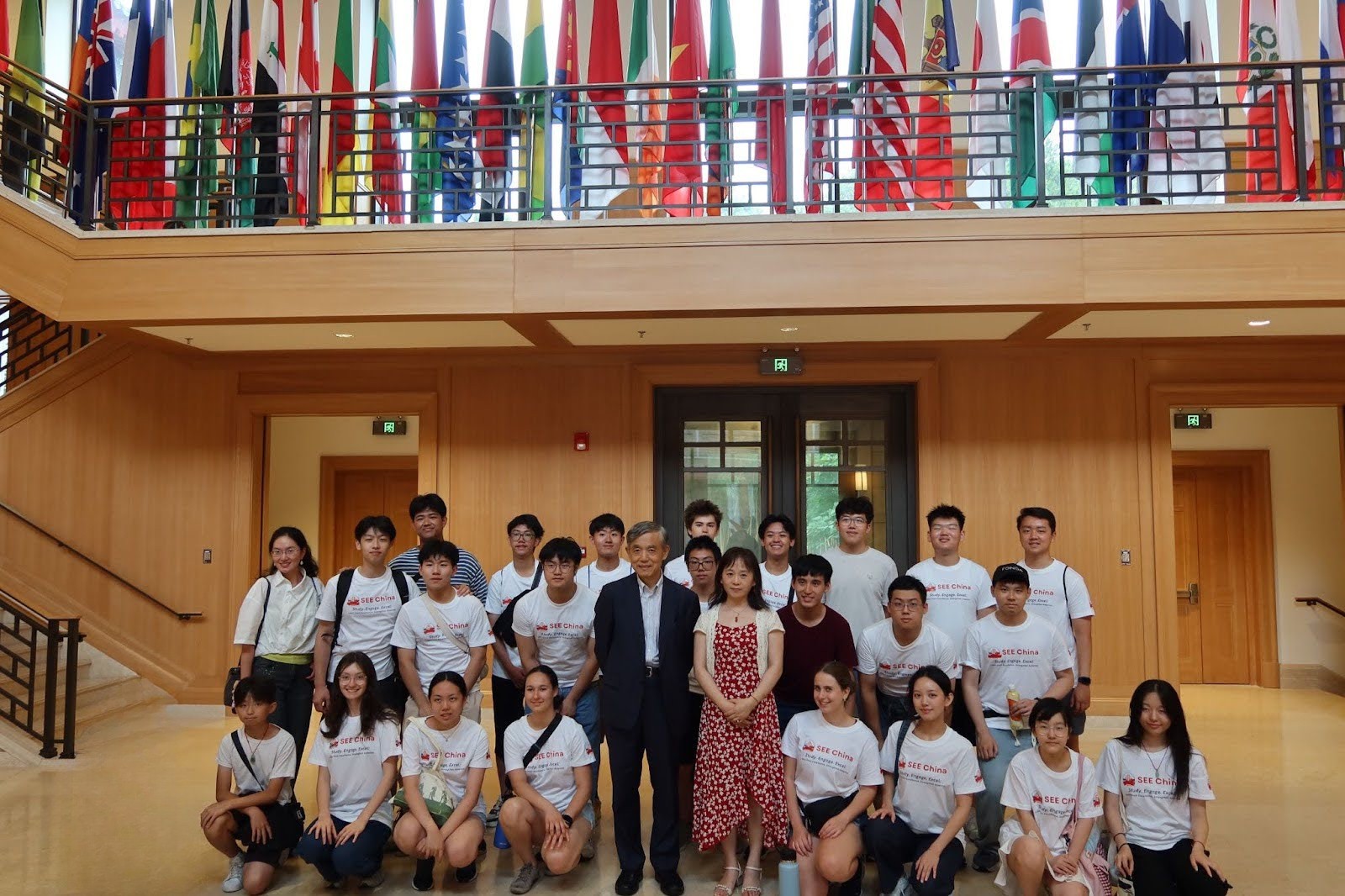
Disclaimer: Photo shown as factual documentation of program activity. Does not constitute endorsement of SEE China by Schwarzman Scholars or Tsinghua University.
Quotes and images are presented for factual and educational context only. They do not imply endorsement of SEE China by Nicholas Burns, the U.S. Embassy, Schwarzman Scholars, Tsinghua University, or any affiliated institution.
Featured Voices
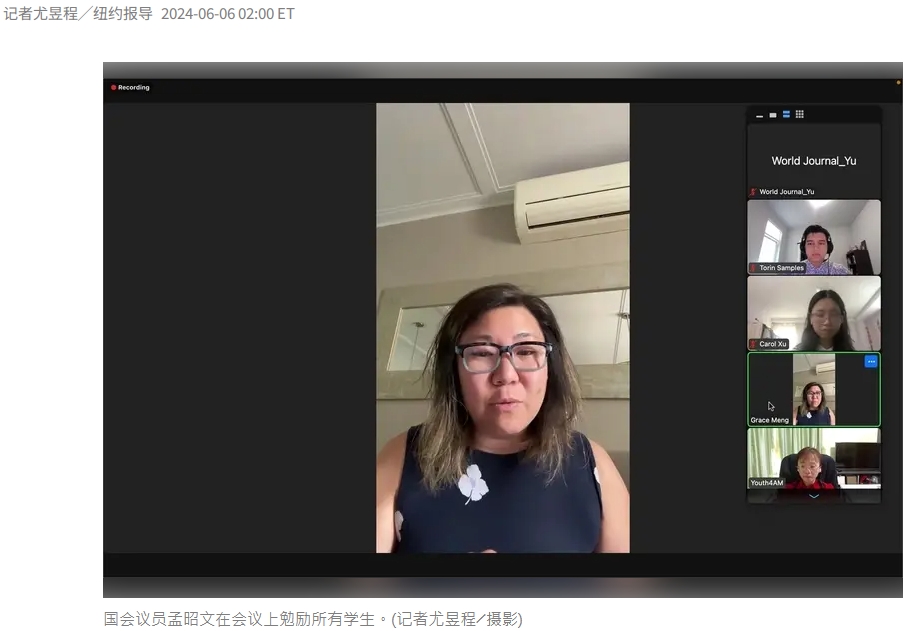
Disclaimer: Statement represents public remarks and does not constitute institutional endorsement.
Frequently Asked Questions
What is SEE China?
SEE China is a 30-day future-pathways field training program under Youth4AM's Global Competence | China Track. It uses modern China as a high-complexity real-world training field to help students build Global Competence in the AI era.
What problem does SEE China address?
SEE China addresses a growing gap in student preparation. In the AI era, old pathways based only on academic performance and major selection are becoming less reliable. Students increasingly need stronger judgment, clearer direction, and the ability to operate across real-world systems.
Why does SEE China focus on AI?
SEE China focuses on AI because AI is not only changing tools. It is changing how success works, how opportunities form, and how students need to prepare for future college, career, and leadership pathways.
Why does SEE China focus on China?
SEE China focuses on China because modern China is both a powerful training field and a strategic knowledge advantage. As more high-value industries operate through globally coordinated systems in which U.S.–China dynamics matter directly, understanding China becomes increasingly relevant to students' future pathways.
Why does system-based competition matter?
In the AI era, competition increasingly operates through larger systems rather than only through isolated individuals. National systems shape industries, industries shape opportunities, and those opportunities shape individual paths.
Why is SEE China different?
Many programs can offer exposure. SEE China is designed to go further by helping students turn exposure into stronger foundations for judgment, direction, and future learning through structured reflection, comparison, collaboration, and final outputs.
What do students gain?
Students gain clearer direction for majors and future careers, produce real analytical outputs that strengthen college applications, improve collaboration and project execution, and build a stronger foundation for future work in high-complexity, AI-shaped environments.
In 2025, Students Saw AI.
In 2026, Students Will Understand AI.
In 2025, SEE China helped students "see AI" - observing and analyzing how AI is transforming cities, industries, and everyday life, and how it acts as a new productive force improving efficiency and quality of life.
In 2026, SEE China will help students understand how how AI creates competitive advantage. Students will learn how AI is reshaping competitiveness at the individual, industry, and national levels, why understanding modern China in that context matters even more, and how to build the capability foundation needed for the AI era.
If you want to build two of the most important advantages for the AI era - a strategic understanding of modern China and the ability to make sound judgments and deliver reliable outcomes across national systems - SEE China is designed for exactly that.

